The spots came back
A few years after you install a softener, it's easy to forget it's there. Then one day the shower glass is spotty again, the soap stops lathering, and the white crust is back on the faucet.
Most of the time, the softener isn't broken. It's out of salt, the salt has bridged, or a setting has drifted. These are simple fixes, and a little routine care keeps them from happening in the first place.
In this guide we'll cover how softener salt works, which type to buy, the most common problems, and a simple care schedule for the rest of your water equipment.
Why your softener needs salt
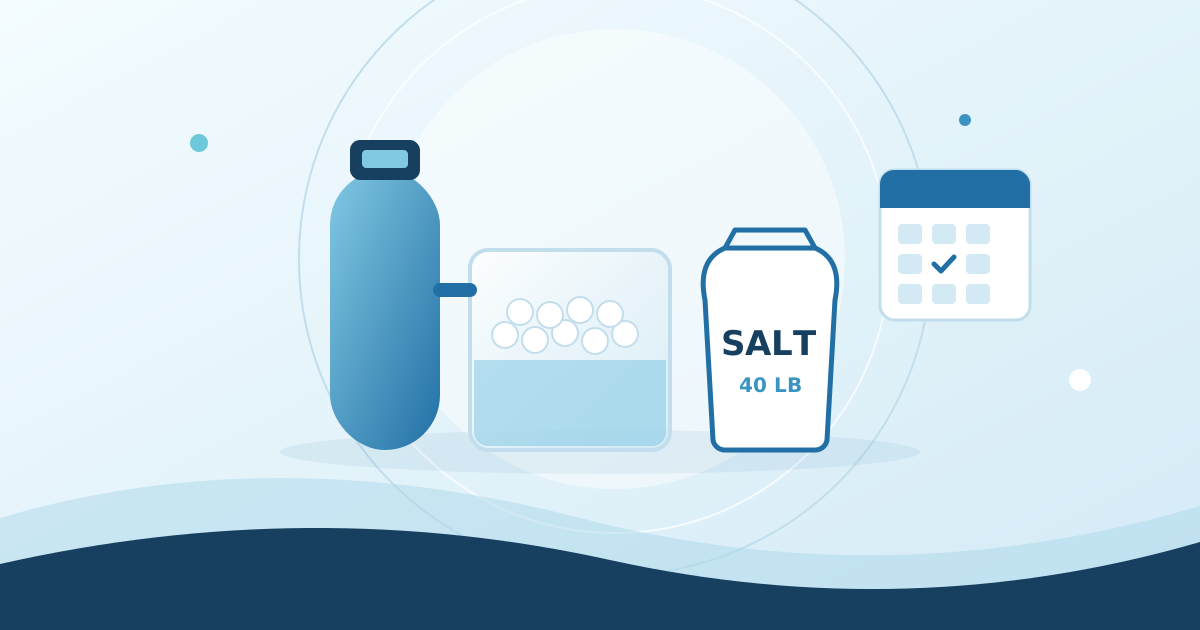
A softener doesn't remove hardness with salt directly. Inside the main tank is a bed of resin beads that grab calcium and magnesium as water passes through.
Over time, those beads fill up. During regeneration, the softener rinses them with salty brine from the brine tank, which washes the hardness down the drain and recharges the resin. No salt means no brine, and no brine means hard water flows straight through.
That's why salt is the one thing every softener owner has to keep up with. If you're still deciding whether a softener makes sense, start with our guide to hard water in South Florida.
Choosing the right salt
Not all softener salt is the same. The main options are:
- Evaporated salt pellets: the highest purity and the least residue, a good default for most homes
- Solar salt crystals: made by evaporating seawater, usually fine, with slightly more insoluble material
- Rock salt: cheapest, but it leaves more dirt and sludge in the brine tank, so we generally don't recommend it
- Iron-control salt: pellets with an additive that helps keep iron from fouling the resin, useful on many South Florida wells
- Potassium chloride: a sodium-free alternative, usually more expensive, and the softener may need a different setting
Whichever you choose, stick with it. Mixing types can encourage bridging, and your softener manufacturer may have a preference.
How much salt, and how often?
Check the brine tank about once a month. A simple rule: keep it at least a quarter to half full, with salt a few inches above the water level, and don't fill it all the way to the top.
How fast salt goes down depends on how hard your water is, how many people live in the home and how the softener is programmed. Many South Florida households add one or two 40-pound bags a month. Wells with high hardness or iron often use more.
If salt use suddenly drops to almost nothing, or suddenly jumps, that's a sign something has changed and the system should be checked.
Common softener problems and quick fixes
- Salt bridge: a hard crust forms across the tank with empty space below. The tank looks full, but nothing dissolves. Gently break it up with a broom handle and let the softener regenerate.
- Salt mushing: fine salt recrystallizes into sludge at the bottom of the tank. It usually needs to be scooped out and the tank cleaned.
- Wrong time after an outage: older softeners keep time with a clock. After a storm or power outage, check the display and reset the time.
- Hardness setting too low: if your water changed, or the setting was never right, the softener regenerates too rarely. A new water test tells you the correct number.
- Iron fouling: iron coats the resin and slowly reduces capacity. A resin cleaner, iron-control salt or iron and sulfur removal ahead of the softener can help.
A simple care schedule for your water system
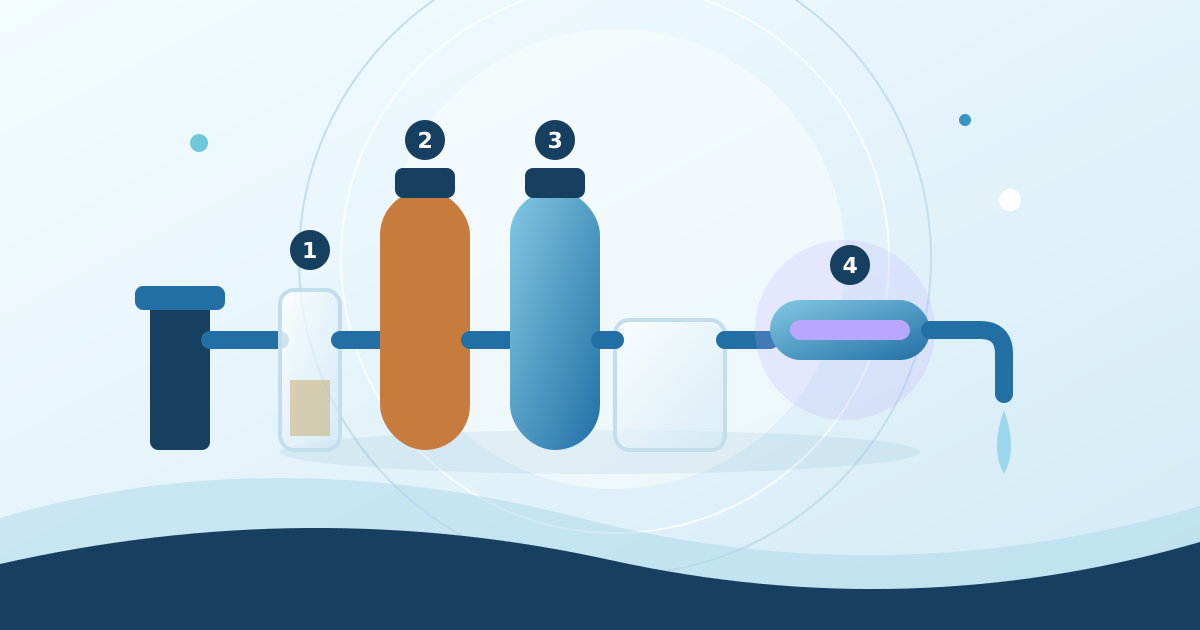
Your softener is usually only one part of the system. Here's a general schedule. Your equipment manuals and water quality may change it:
- Monthly: check the softener salt level and look for bridging
- Every 3 to 6 months: replace sediment prefilters, sooner on wells with sand or sediment
- Every 6 to 12 months: replace reverse osmosis prefilters and carbon filters
- Yearly: replace the UV lamp and clean the quartz sleeve, and test your water
- Every 2 to 5 years: replace the RO membrane, depending on water quality and use
- Every 3 to 5 years: rebed carbon filter tanks, depending on size and water use
- Periodically: clean the brine tank, and have resin cleaned or inspected if your water has iron
If you're on a private well, test for bacteria at least once a year and after flooding. Our guide to UV treatment for well water explains why.
Make salt one less errand: salt delivery
Forty-pound bags are heavy, and the softener is often in a hot garage or a tight utility closet. That's why many families stop checking it, until the spots come back.
A salt delivery schedule takes care of it. We set the frequency based on your system and your usage, and we can check the equipment, replace filters and flag anything that needs attention while we're there. Availability, quantities and any charges are confirmed before you enroll.
How we help you care for your system
We're a father-and-son team, and we service systems we installed as well as ones we didn't.
- Tell us the brand and what you've noticed, and we'll help plan the next step.
- We check hardness and recheck your softener settings against your current water.
- We replace filters, troubleshoot performance and explain what your system needs in plain English.
Need a checkup? Explore service and maintenance, request a free water quality check or call us at (561) 870-3810. We serve Palm Beach, Broward, Martin and Miami-Dade counties.
Frequently asked questions
How often should I add salt to my water softener?
Check the brine tank about once a month. Keep it at least a quarter to half full, and keep the salt a few inches above the water line. Many South Florida households add one or two 40-pound bags a month, but your use depends on hardness, household size and how the softener is set.
What kind of salt should I use in my water softener?
High-purity evaporated salt pellets are usually the cleanest choice and are least likely to leave sludge. Solar salt crystals also work in many systems. Avoid rock salt, which carries more insoluble material. If you have iron in your water, ask about salt with an iron-control additive. Always follow your softener manufacturer's guidance.
What is a salt bridge and how do I fix it?
A salt bridge is a hard crust that forms across the brine tank, leaving an empty space underneath. The tank looks full, but the salt isn't touching the water, so the softener can't regenerate. Gently break it up with a broom handle, without hitting the tank walls, then let the system regenerate. If it keeps happening, lower the salt level and avoid overfilling.
How long does a water softener last?
A well-maintained softener often lasts 10 to 15 years or more. The resin inside may need replacement sooner if your water has iron or chlorine, which wear it down. Regular salt, the right settings and periodic service help it last longer.
Do I need to do anything after a power outage?
Many older softeners keep time with a clock and lose it during an outage, so regeneration happens at the wrong time. After power returns, check the display and reset the time if needed. Newer models often hold their settings. If floodwater reached the equipment, call for service before using it.
Sources
Clear recommendations, a written estimate and support after installation.
Let’s talk about your water ↗General guidance. Treatment recommendations depend on your water, equipment and test results. About water testing.