Before you choose a softener
You pull a glass out of the dishwasher, hold it up to the kitchen window, and it looks like someone breathed on it. You run it again. Still cloudy. Sound familiar?
In South Florida, that cloudy film is one of the most common reasons people call us. Most of the time, hard water is behind it. But not always, and that difference matters before you spend money on a water softener.
In this guide we'll cover what hard water is and why our area has it, how to tell hard-water film from something else, why city water and well water are very different stories here, and when a softener is worth it (and when it isn't).
What is hard water, and why does South Florida have it?
Hard water is water with a lot of dissolved calcium and magnesium. It isn't dirty or unsafe. It's just carrying rock.
In our case, that rock is limestone. Much of South Florida's water comes from the Biscayne Aquifer, a shallow layer of porous limestone under our feet. As groundwater moves through it, it picks up minerals. Before treatment, Biscayne Aquifer water near Deerfield Beach averages about 235 mg/L of hardness, which is firmly in the "very hard" range.
Hardness is measured two ways, and you'll see both:
- mg/L (or ppm), used in utility water quality reports
- Grains per gallon (gpg), used by most water treatment pros. 1 gpg equals about 17.1 mg/L.
A common scale from the U.S. Geological Survey:
| Classification | mg/L | Grains per gallon |
|---|---|---|
| Soft | 0–60 | 0–3.5 |
| Moderately hard | 61–120 | 3.6–7 |
| Hard | 121–180 | 7.1–10.5 |
| Very hard | over 180 | over 10.5 |
Here's the part most articles skip: the water in the aquifer and the water at your tap are not always the same thing. We'll get to that in a minute.
Why do my glasses look cloudy? Hard-water film vs. etching
Cloudy glasses usually come from one of two very different problems, and they need opposite fixes.
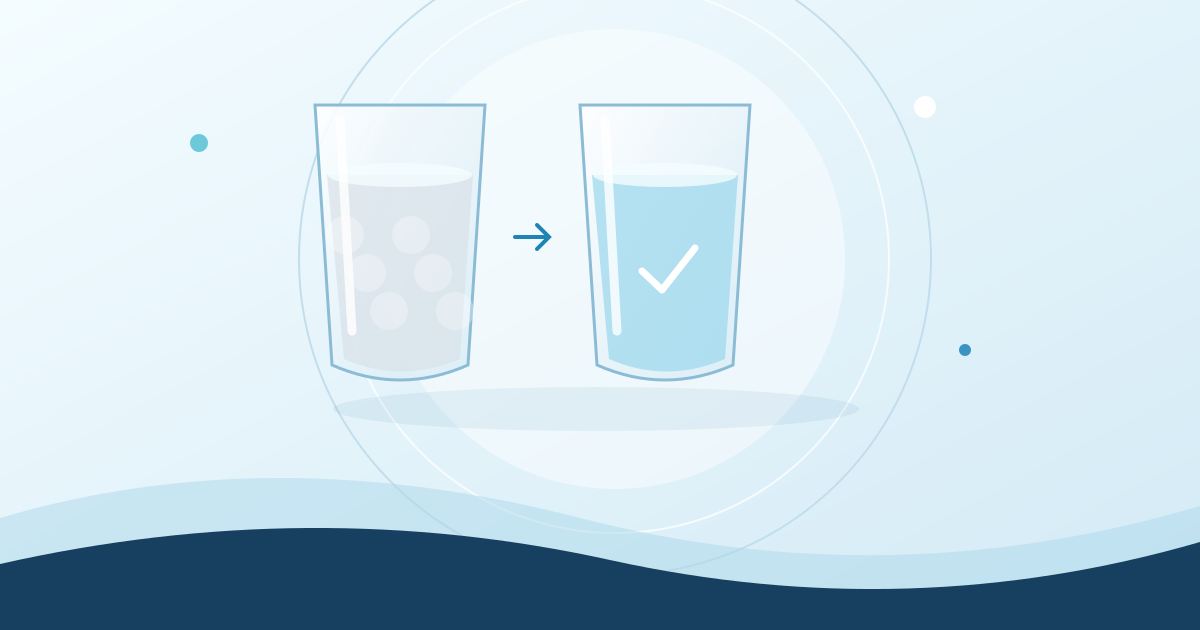
Hard-water film is a thin layer of calcium and magnesium left behind as water dries on the glass. It sits on top of the surface, which means you can remove it.
Etching is permanent damage to the glass itself. It tends to show up when water is very soft and the dishwasher uses too much detergent, so the detergent attacks the glass instead of the dirt. A water softener won't fix etching. If you already soften your water, it can even make it worse if you don't cut back on detergent.
The 5-minute vinegar test
- Soak a cloudy glass in plain white vinegar for about five minutes.
- Rinse it and dry it with a soft towel.
- Hold it up to the light.
If the glass comes out clear, you were looking at mineral film, and hard water is a likely cause. If it's still cloudy, rainbow-tinted, or rough to the touch, that's etching. In that case, the next step is adjusting detergent and rinse aid, not buying equipment.
Other signs of hard water around the house
Cloudy glasses are rarely the only clue. Look for these too:
- White, chalky crust on faucets, shower heads, and around drains
- Spots on shower glass that come back days after you clean it
- Soap and shampoo that don't lather well, so you use more
- Popping or rumbling sounds from a tank water heater, often a sign of scale at the bottom
- Reduced flow from shower heads as mineral buildup narrows the openings
- Scale in the coffee maker, kettle, or ice maker
One or two of these on their own don't prove much. Several together, especially the water heater and fixture crust, are a good reason to test.
City water vs. well water: two very different stories
This is where a lot of online advice gets South Florida wrong.
If you're on city water
Many utilities in our area already soften the water before it reaches you. Boca Raton, Deerfield Beach, Palm Beach County Water Utilities and Miami-Dade all use lime softening, membrane softening (nanofiltration), or a mix of both. Boca Raton, for example, targets roughly 50–80 mg/L of total hardness in finished water. That's soft to moderately hard, far below what comes out of the ground.
That doesn't mean city water never causes spots. Hardness varies by utility, by treatment plant, and sometimes by season. But it does mean you can't assume your water is "very hard" just because you live in South Florida. If you see a single hardness number online for your whole city, take it with a grain of salt. Different websites often quote very different numbers for the same town.
The better move is to check your utility's annual water quality report (also called a Consumer Confidence Report or CCR). Most list hardness or at least calcium. Then test what actually comes out of your tap.
If you're on a private well
Well water doesn't go through a treatment plant, so you get the aquifer as it is. That often means much higher hardness, and in many South Florida wells, iron and sulfur too. Those can cause orange stains and a rotten-egg smell, which a softener alone may not solve. Well water almost always needs a test before anyone recommends equipment.
When a water softener actually makes sense
A softener is usually worth considering when:
- Your tap water tests in the hard or very hard range (roughly 7 gpg and up)
- You're on a private well with hard water
- You see scale on fixtures, in the water heater, or in appliances, and the vinegar test points to mineral film
- You have a tankless water heater, which is especially sensitive to scale. Check its manual, since some manufacturers specify hardness limits.
- You're tired of the constant scrubbing and want fewer spots on glass, tile and fixtures
When it probably doesn't
A softener may not be the right first step when:
- Your city water already tests soft or only slightly hard
- Your glasses fail the vinegar test, which points to etching rather than minerals
- Your main complaint is chlorine taste or smell. That's a filtration question, not a hardness one.
- You're on a well with iron or sulfur odor. Those usually need dedicated treatment, sometimes before a softener.
- You mostly care about drinking water. A reverse osmosis system at the kitchen sink may fit better.
We'd rather tell you a softener isn't needed than sell you one that won't fix your actual problem.
What a softener does (and doesn't do)
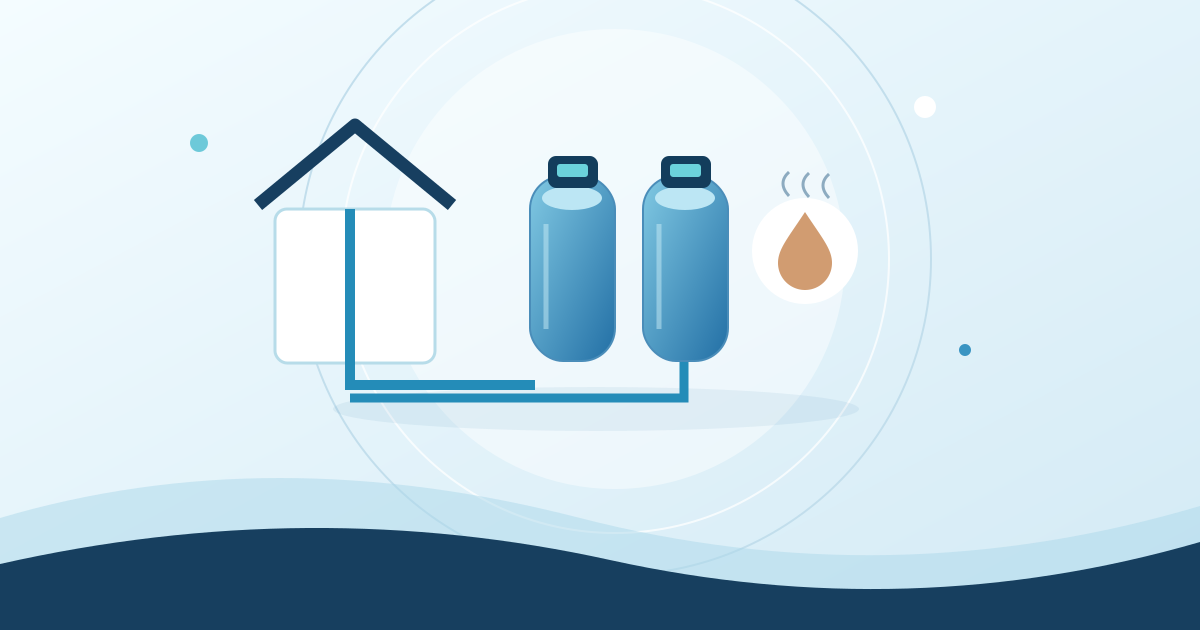
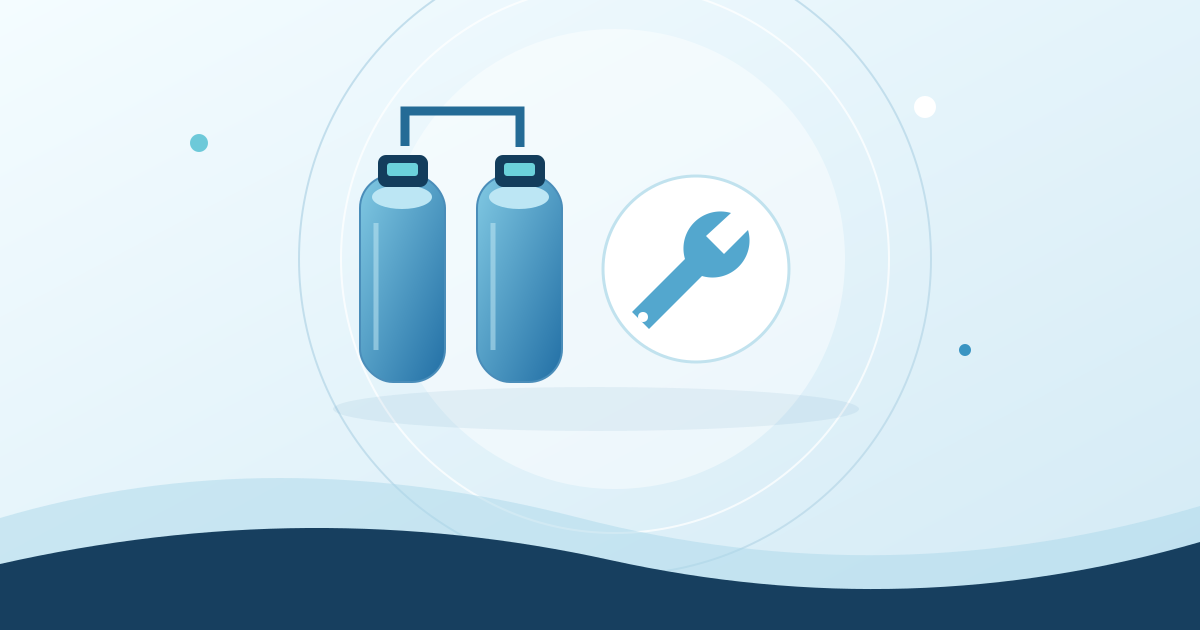
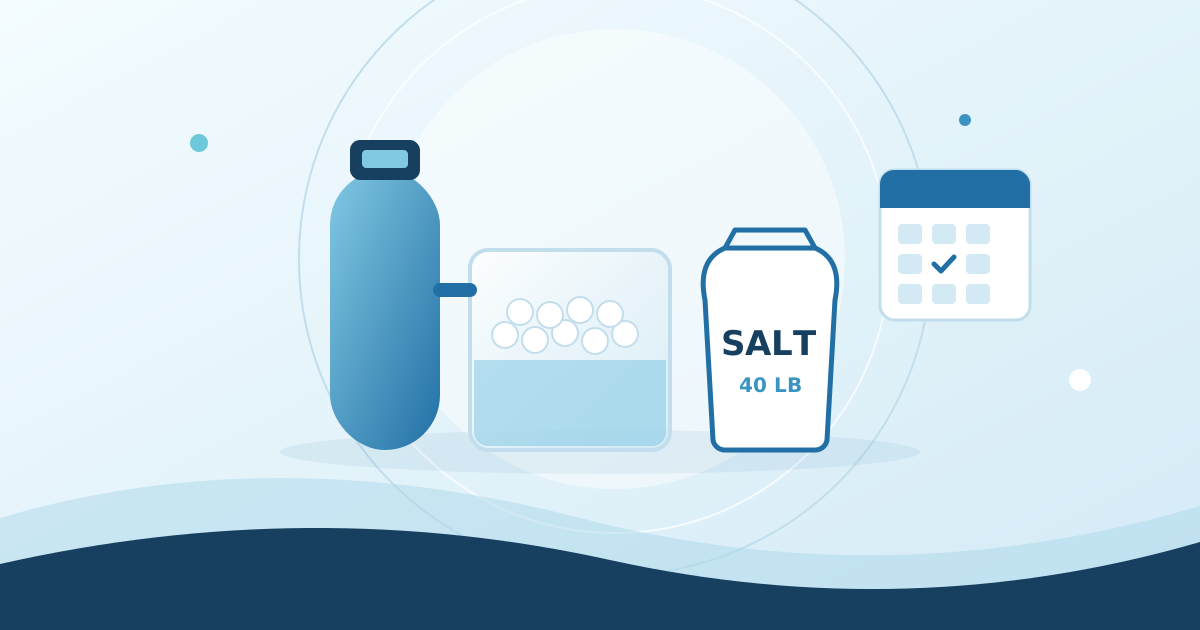
Most home softeners use ion exchange. Water passes through a tank of resin beads that trade calcium and magnesium for sodium (or potassium). Every so often the system rinses the resin with salt water to recharge it. That's why softeners need salt.
A few things worth knowing before you buy:
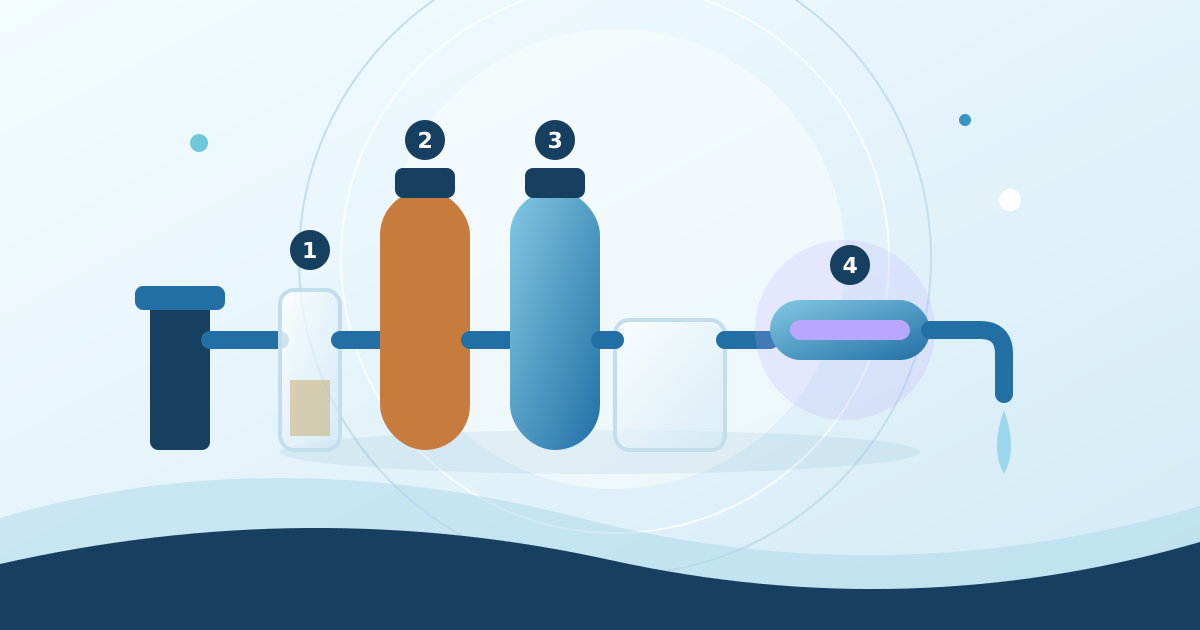
- It's not a filter. A softener targets hardness. It isn't designed to remove chlorine, chloramine, or most other contaminants. If taste and odor matter to you, you may need filtration alongside it.
- It adds a small amount of sodium. The harder the water, the more sodium it adds. If you're on a sodium-restricted diet, talk to your doctor. Potassium chloride instead of salt, or a reverse osmosis system for drinking water, are common options.
- It needs upkeep. Salt has to be refilled, and settings should match your actual hardness and household size. A softener set up for the wrong numbers wastes salt and water.
- "Salt-free" conditioners are a different thing. They're designed to reduce scale buildup, but they don't remove hardness minerals. Results vary, and they won't give you the same "slippery" soft-water feel.
How we approach it: test first, then decide
We're a father-and-son team, and our rule is simple: we look at your water before we talk about equipment.
- You tell us what you're noticing. Spots, scale, taste, smell, stains, or just a feeling something's off.
- We check your water. Hardness, TDS and pH for every home, plus iron and sulfur indicators for well water. Some concerns call for lab testing, and we'll tell you when that's the case.
- We explain the results and give you a written estimate. If a softener makes sense, we size it to your hardness and household. If it doesn't, we'll say so.
Curious what's in your water? Request a free hardness and water quality check or call us at (561) 870-3810. We serve Palm Beach, Broward, Martin and Miami-Dade counties.
Frequently asked questions
Is South Florida water hard?
The groundwater is. The Biscayne Aquifer runs through limestone, so untreated water is often very hard. But many city utilities soften water before it reaches homes, so tap water can be much softer. Private wells usually aren't treated, so well water is often hard. The only way to know your number is to test your own tap.
Is hard water safe to drink?
Hard water is generally not considered a health concern. Calcium and magnesium are common minerals. The issues are mostly practical: scale in appliances and pipes, spots on glass, and soap that doesn't lather well. If you have other water quality questions, a test can show what's actually in your water.
Will a water softener fix cloudy glasses?
It can if the cloudiness is hard-water film. Soak a glass in white vinegar for five minutes. If it comes out clear, minerals were the cause and a softener may help. If it stays cloudy, the glass is likely etched, and a softener won't fix it.
Do I need a softener if I'm on city water?
Not necessarily. Many South Florida utilities already soften their water. Check your utility's annual water quality report, then test your tap. If your water is in the hard range or you're seeing scale, a softener may make sense. If it's already soft, filtration or nothing at all may be the better choice.
How do I find out how hard my water is?
You can look up your utility's annual water quality report, use a home test strip, or ask for a professional test. FNSWater Treatment offers a free hardness and water quality check in Palm Beach, Broward, Martin and Miami-Dade counties.
Sources
- Membranes Tailored as Needed (Water & Wastes Digest): Biscayne Aquifer hardness near Deerfield Beach and the city's lime and membrane softening
- City of Boca Raton: Water Supply and Treatment: membrane and lime softening
- Boca Raton nanofiltration case study (Hydranautics): 50–80 mg/L finished-water hardness target
- Palm Beach County Water Utilities 2023 Water Quality Report: lime softening, ion exchange, nanofiltration and reverse osmosis
- Miami-Dade WASD Water Quality Report: lime softening of Biscayne Aquifer water
- Hardness classification: U.S. Geological Survey
Clear recommendations, a written estimate and support after installation.
Let’s talk about your water ↗General guidance. Treatment recommendations depend on your water, equipment and test results. About water testing.