When the test comes back positive
You send off a well water sample, and the lab report says "coliform bacteria: present." Or a hurricane rolls through, your yard floods, and you start wondering what got into the well.
Either way, it's an unsettling moment. The good news: bacteria in a private well is a common, solvable problem. The important part is fixing it in the right order.
In this guide we'll cover what a positive bacteria test means, why South Florida wells are at risk, how UV treatment works, and what it needs to work properly.
What does "coliform present" actually mean?
Labs usually test for total coliform bacteria, and sometimes E. coli. Most coliform bacteria aren't harmful on their own. They're an indicator. If they're getting into your well, other germs could be getting in the same way.
E. coli is more serious, because it points to contamination from human or animal waste. If your test shows E. coli, don't drink the water untreated. Use bottled water or boil water for drinking and cooking until the problem is solved, and follow guidance from your county health department.
Why South Florida wells are especially at risk
A lot of private wells here are fairly shallow, and the limestone underneath is porous. Water can move quickly from the surface to the aquifer. A few things raise the risk:
- Flooding and storm surge after hurricanes and heavy rain
- A damaged, loose or buried well cap
- Septic systems close to the well
- A cracked well casing or recent well repairs
- Wildlife or insects getting into the wellhead
That's why UF/IFAS and the Florida Department of Health recommend testing private wells for bacteria at least once a year, and again after flooding or any repair.
Step one is always the source
Before anyone installs equipment, it's worth finding out how the bacteria got in. Fixing a cracked cap or a flooded wellhead may solve the problem on its own.
- Inspect the wellhead, cap and casing, and check how close the septic system is.
- Shock chlorinate the well. A licensed well contractor or treatment pro adds a strong chlorine solution to disinfect the well and plumbing, then flushes it out.
- Retest after the chlorine is gone, usually one to two weeks later.
If the bacteria comes back, or your well is in an area where it keeps happening, that's when continuous disinfection like UV makes sense.
How UV water treatment works
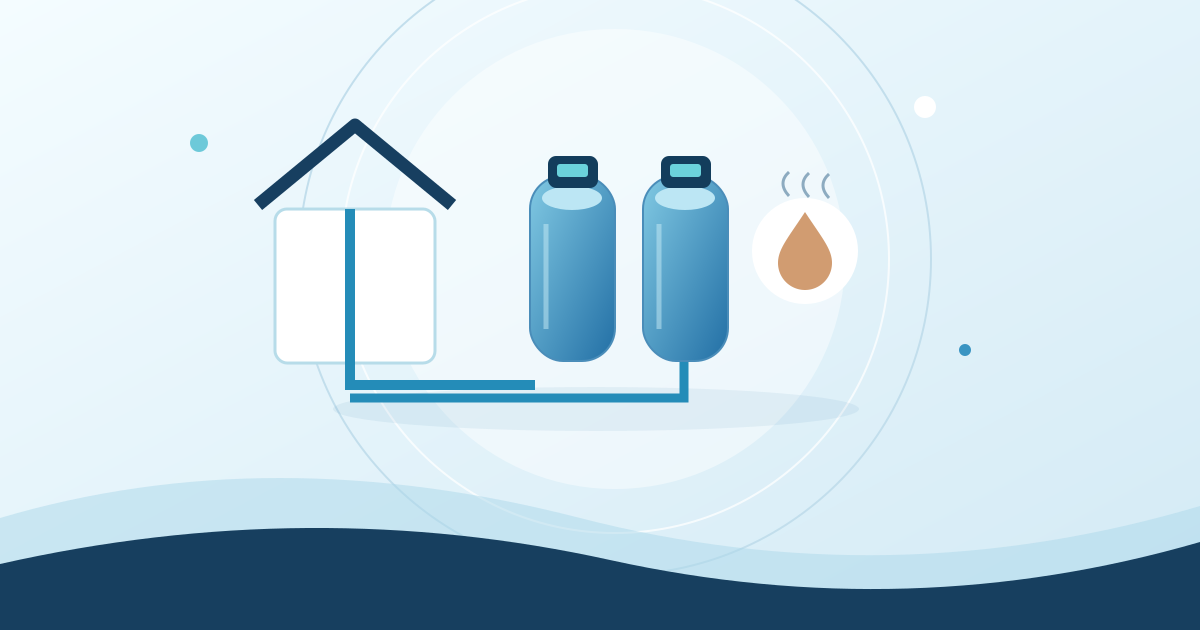
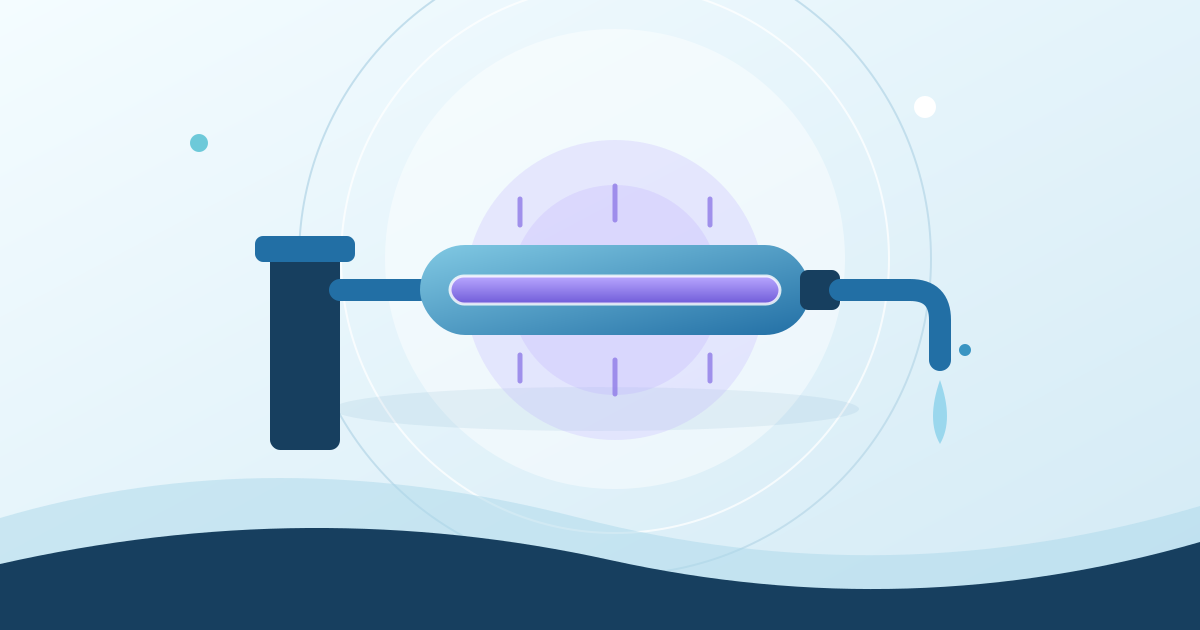
A UV system is a stainless-steel chamber with a special lamp inside a quartz glass sleeve. As water flows past, ultraviolet light damages the DNA of bacteria, viruses and parasites like Giardia and Cryptosporidium, so they can't reproduce and make you sick.
A few things people like about it:
- No chemicals are added to the water
- No change to taste or smell
- It treats every tap in the home when installed at the point of entry
- Upkeep is simple: a new lamp about once a year and a periodic sleeve cleaning
For whole-home use, look for a system certified to NSF/ANSI Standard 55, Class A. It's designed to deliver a dose strong enough for water that may be contaminated.
What UV can't do
UV is excellent at one job. It's important to know what it doesn't handle.
- It doesn't remove anything. Iron, sulfur, hardness, nitrate, lead and chemicals pass right through.
- It has no lasting effect. Water is disinfected at the moment it passes the lamp. If bacteria are growing in pipes or a tank after the UV, the UV won't reach them, so the plumbing should be disinfected when the system is installed.
- It needs clear water. Cloudy water, iron and sediment can shield bacteria from the light.
- It needs power. If the electricity goes out during a storm, the lamp is off. Plan for safe drinking water during outages, and let the lamp warm up and run water for a few minutes when power returns.
Why pretreatment matters in South Florida
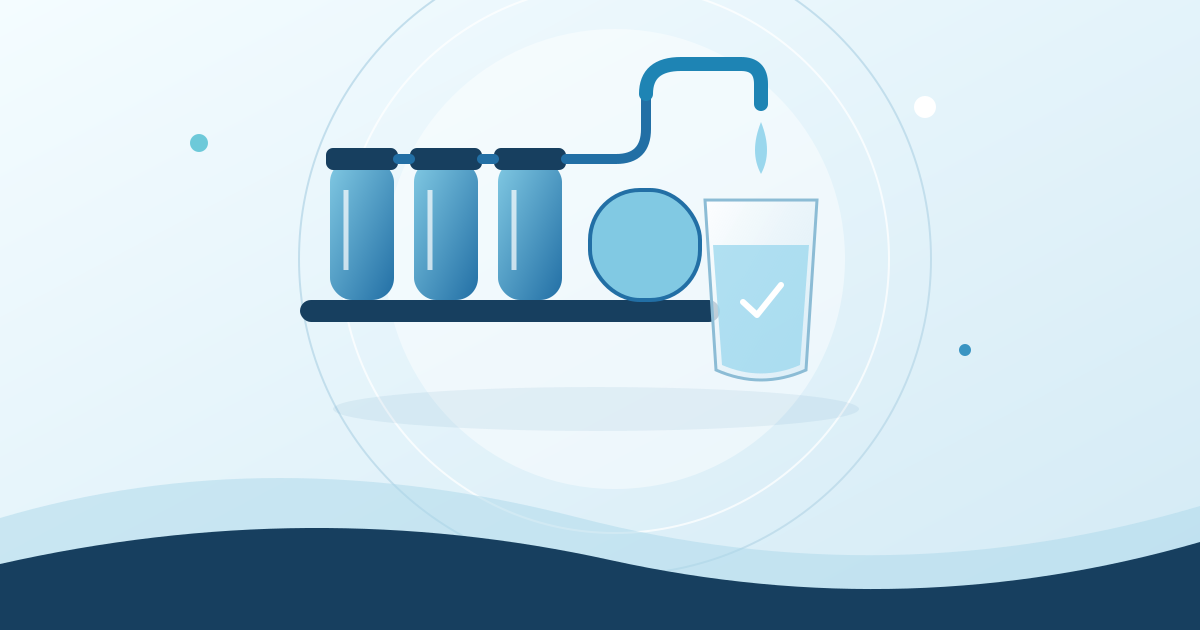
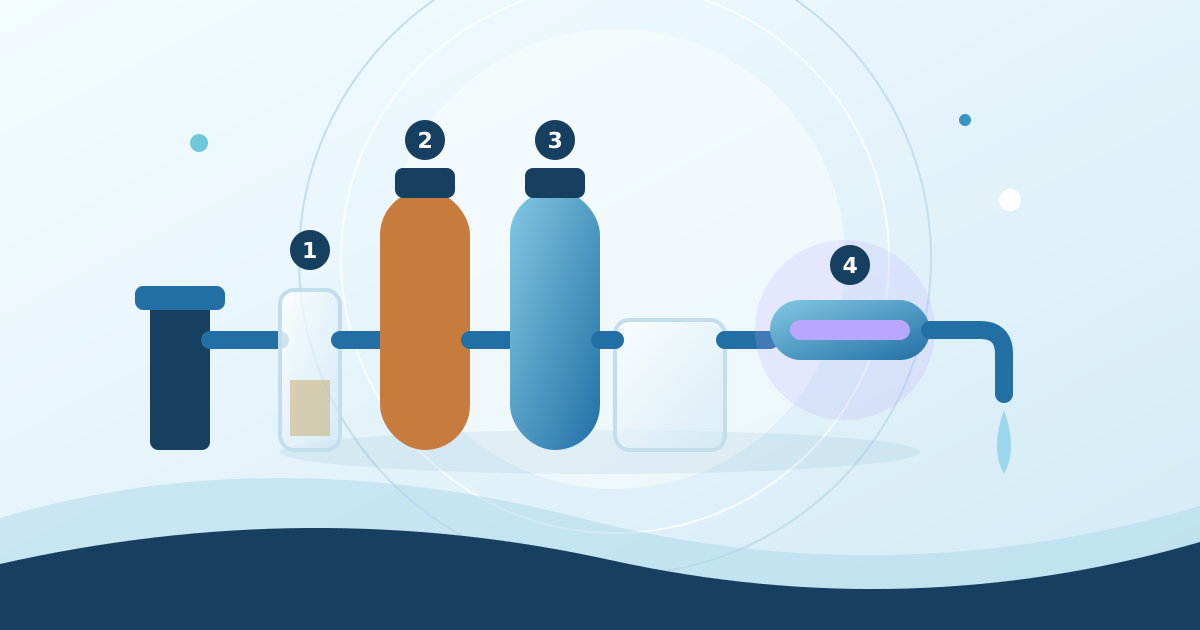
This is where many UV systems fail. Iron, manganese and hardness are common in local wells, and they coat the quartz sleeve over time. A dirty sleeve blocks the light, and the system quietly stops working even though the lamp is on.
Manufacturers usually list maximum levels for water entering the UV. Typical guidelines are around 0.3 mg/L of iron, 0.05 mg/L of manganese and 7 grains per gallon of hardness, but check the specific model. Wells above those levels usually need iron and sulfur removal and a water softener first, plus a sediment filter right before the UV.
That's why UV is almost always the last step in a well water system, not the first.
How we approach it: test first, then design
We're a father-and-son team, and we design well systems around your test results.
- We check iron, sulfur, hardness, TDS and pH, and recommend a certified lab for bacteria testing when that's the concern.
- We make sure the water entering the UV is clear enough for it to work, and size the unit to your home's flow rate.
- You get a written estimate and a reminder schedule for lamp changes and sleeve cleaning.
Curious what's in your water? Request a free water quality check or call us at (561) 870-3810. We serve Palm Beach, Broward, Martin and Miami-Dade counties.
Frequently asked questions
What should I do if my well tests positive for bacteria?
Start by finding the source: check the well cap, casing and nearby septic system. Then have the well shock chlorinated and retest one to two weeks later. If E. coli was found, use bottled or boiled water for drinking and cooking until a retest is clear, and follow your county health department's advice.
Does a UV system kill bacteria in well water?
Yes. A properly sized UV system inactivates bacteria, viruses and parasites as water flows past the lamp, so they can't make you sick. It needs clear water and a clean quartz sleeve to work, so iron, manganese and hardness are usually treated first.
Does UV remove iron or the rotten-egg smell?
No. UV only disinfects. It doesn't remove iron, sulfur, hardness or chemicals. Those need dedicated treatment, and they should be handled before the UV so they don't coat the sleeve and block the light.
How often does a UV lamp need to be replaced?
Most UV lamps are replaced about once a year, even if they still glow, because their output drops over time. The quartz sleeve should be cleaned periodically, more often if your water has iron or hardness.
Should I test my well after a hurricane or flood?
Yes. UF/IFAS and the Florida Department of Health recommend testing after flooding or any well repair, and at least once a year for bacteria, nitrate, lead and pH. If floodwater covered the wellhead, don't drink the water until it has been disinfected and a test comes back clear.
Sources
- UF/IFAS Florida Well Owner Network FAQ: annual testing for coliform bacteria, nitrate, lead and pH
- Florida Department of Health in Palm Beach County: well testing at the Environmental Laboratory
- UF/IFAS: Household Drinking Water Testing for Public and Private Water Supplies
- U.S. EPA: Private Drinking Water Wells
Clear recommendations, a written estimate and support after installation.
Let’s talk about your water ↗General guidance. Treatment recommendations depend on your water, equipment and test results. About water testing.